
Discover the essential Blackjack basic strategy and learn how different table rules affect your game. Master the variations to boost your winning potential!
Understanding Basic Strategy in Blackjack
Definition of Basic Strategy
Blackjack basic strategy is a mathematically derived set of guidelines that dictates the optimal way to play each hand dealt in a game of blackjack. It takes into account the player's hand value and the dealer's upcard to minimize the house edge. The strategy is based on probabilities and statistical analysis, which show the best possible moves a player can make in various situations.
Importance of Basic Strategy
Utilizing basic strategy is crucial for any serious blackjack player. It allows players to reduce the house edge to as low as 0.5%, depending on the specific rules of the table. By making informed decisions rather than relying on gut feelings or emotions, players can maximize their winning potential over the long run. Learning basic strategy is often the first step for players looking to improve their game and increase their chances of success.
Key Components of Basic Strategy Charts
Basic strategy charts display the recommended actions for every possible combination of player hand and dealer upcard. These charts typically include the following:
- Player Hands: Values ranging from 4 to 21, including hard hands (no Aces) and soft hands (with an Ace).
- Dealer Upcards: The value of the dealer’s visible card, ranging from 2 to Ace.
- Recommended Actions: Based on the player hand and dealer upcard, the chart indicates whether to hit, stand, double down, or split.
For example, if a player has a hard 16 and the dealer's upcard is a 10, basic strategy dictates that the player should hit. Conversely, with a soft 18 against a dealer's 5, the player should stand.
Impact of Dealer's Upcard on Blackjack Strategy
Strategies Against Different Dealer Upcards
The dealer's upcard is essential in determining the best strategy. Certain upcards are more favorable for players, while others can be quite disadvantageous. Here are some general strategies for various dealer upcards:
- Dealer Upcard 2-6: These are considered weak cards. Players are more likely to stand on lower hand values, as the dealer has a higher chance of busting.
- Dealer Upcard 7-10: These cards signal a strong position for the dealer. Players should be more aggressive, potentially doubling down or hitting to improve their hand.
- Dealer Upcard Ace: This is the most challenging situation for players. It's generally advisable to play conservatively, focusing on maintaining the best possible hand while being aware that the dealer has a strong chance of making a blackjack.
Player's Hand Value vs. Dealer's Upcard
The interaction between the player's hand value and the dealer's upcard significantly influences the strategy. For instance, a player with a hard 12 facing a dealer's 4 should stand, as statistical analysis suggests that the dealer is likely to bust. In contrast, if that same player faces a dealer's 10, hitting is usually the recommended action, as the risk of the dealer making a strong hand is higher.
Situational Adjustments Based on Upcards
Players must also be adaptable based on specific game situations and table rules. For example, if the table allows surrender, it can alter decisions significantly. If a player has a hard 16 against a dealer's Ace, they might choose to surrender rather than hit or stand, as this can minimize losses in a challenging situation.
Variations in Table Rules and Their Effects
Hit or Stand Rules
Different tables may have variations in hit or stand rules that can influence strategy. For example:
- Dealer Stands on Soft 17: If the dealer must stand on a soft 17 (Ace-6), this increases the player's chances of winning against weaker dealer hands. Players can afford to be more aggressive with their strategies when the dealer has this rule.
- Dealer Hits on Soft 17: In this case, players should adjust their strategies accordingly, often playing more conservatively since the dealer has a better chance of improving their hand.
Doubling Down Rules
Rules surrounding doubling down can also vary significantly between tables and can impact basic strategy. Common variations include:
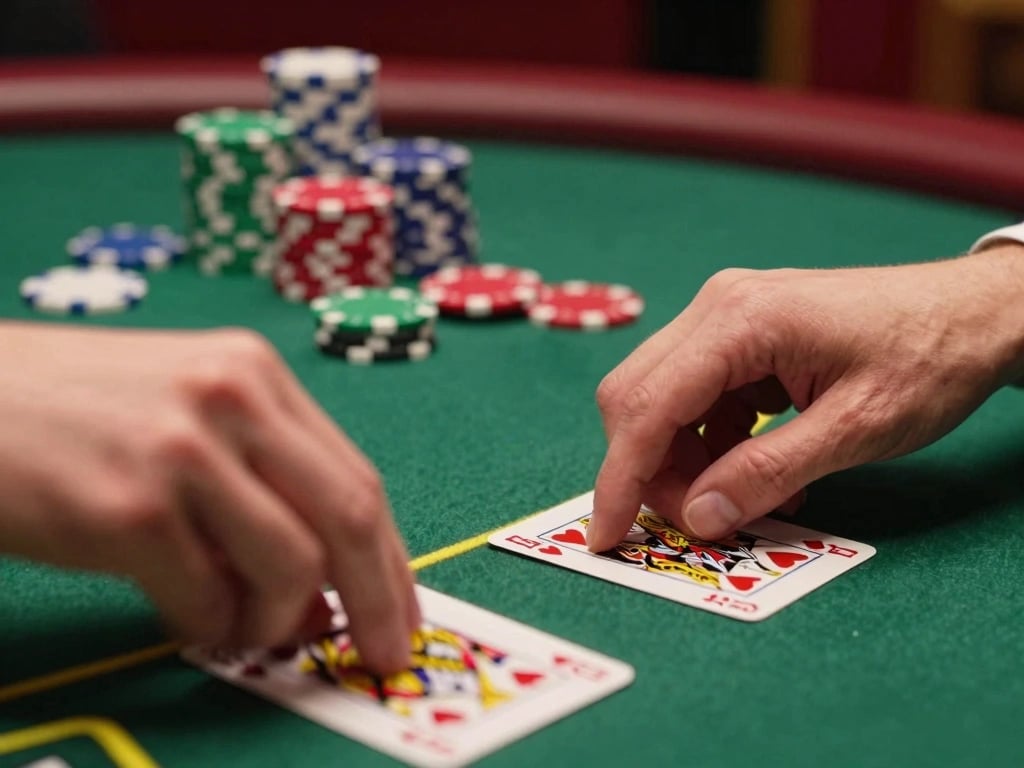
- Double After Split (DAS): If players are allowed to double down after splitting pairs, they can take advantage of favorable situations, increasing their potential winnings. For instance, splitting Aces and then doubling on a favorable hand can be highly advantageous.
- Restrictions on Doubling Down: Some tables may limit doubling down to certain hand values (e.g., only on 9, 10, or 11). Players need to adjust their strategies accordingly, avoiding aggressive plays that would otherwise be recommended in a more favorable rule set.
Splitting Rules and Their Influence
Splitting pairs is another area where table rules can vary, affecting overall strategy. Common rules include:
- Number of Splits Allowed: Some tables allow unlimited splits, while others may limit players to only three or four splits. This influences the strategy since players may want to be more cautious at tables with restrictions.
- Re-splitting Aces: If a table allows players to re-split Aces, it can lead to more aggressive strategies, particularly against weak dealer upcards. Conversely, if re-splitting is not allowed, players may need to adjust their expectations and play more conservatively.
Common Variants of Blackjack and Strategy Adjustments
European Blackjack Differences
European Blackjack has specific rules that significantly impact basic strategy. One of the key differences is that the dealer does not receive a hole card until after all players have completed their hands. This means:
- Players cannot take insurance against a dealer’s potential blackjack, which influences how they play against strong dealer upcards.
- Players may need to adjust their hit/stand decisions on certain hands, especially in situations where the dealer shows a strong upcard, as the risk of the dealer having a blackjack is unknown until the end.
Spanish 21 Strategy Changes
Spanish 21 is another popular variant that alters the traditional rules of blackjack. Notably, the game uses a Spanish deck (which removes all 10s), leading to a lower number of cards and increased emphasis on strategy:
- The removal of 10s means players must adjust their hand values and strategies significantly. For example, a hand that would normally be considered strong may now be less so.
- Spanish 21 offers additional bonuses for certain hands, such as a 21 made of five cards. This can encourage players to adopt more aggressive strategies, particularly when they have the opportunity to draw more cards.
Blackjack Switch: Unique Strategy Considerations
In Blackjack Switch, players can play two hands and switch the second card between them. This introduces unique strategy considerations:
- Players must assess the value of both hands and the possibility of improving them through switching.
- The dealer typically wins all ties, so players need to adjust their strategies to be more aggressive when they have a strong hand, as the risk of a tie is less favorable.
Advanced Strategy Considerations Based on Table Rules
Card Counting and Rule Variations
While basic strategy is essential, advanced players often employ card counting techniques to gain an advantage. Variations in table rules can significantly affect the effectiveness of these strategies:
- If a table has a continuous shuffling machine (CSM), traditional counting strategies become less effective since the deck is constantly shuffled, reducing the player's ability to track high and low cards.
- In contrast, tables with fewer decks or more favorable shuffling rules allow for more accurate counts, enabling players to adjust their betting strategies based on the composition of the remaining cards.
Effect of Surrender Options on Strategy
Many casinos offer a surrender option, allowing players to forfeit their hand for half their bet back. This rule impacts strategy significantly:
- Players facing a strong dealer upcard (like Ace or 10) with a weak hand (like 16 or 15) should consider surrendering instead of hitting or standing, as it can minimize losses over time.
- Understanding when to surrender can provide a significant strategic advantage, especially in games where this option is available.
Player Position and Table Dynamics
The player's position at the table can also influence strategy. Being seated at the first position (the "first base") or the last position (the "third base") can determine the flow of the game and the player's options:
- First Base: Players at the first base act before others, which can be beneficial for influencing the dealer's hand. However, it also requires careful consideration of how other players' actions may affect the strategy.
- Third Base: Players here have the advantage of observing all other players’ actions before making their decision. This can lead to more informed decisions, especially when considering whether to hit, stand, or double down.
In conclusion, understanding blackjack basic strategy and how it varies by table rules is essential for any player seeking to maximize their potential in the game. By adapting to the dealer's upcard, table rules, and variants, players can make informed decisions that enhance their overall gameplay and enjoyment.